The influencing technique no one told you about
Or why it's difficult to drive innovation and what you can do about it

AN UNDERRATED tip for gaining influence
We've all been there—joining a new team, brimming with ideas, and armed with a 90-day plan. You're eager to launch new projects, secure budgets, invest in exciting tools and drive change. But within a week, reality sets in. Your ideas go unnoticed, and you struggle to get a word in during key meetings.
In her book Job Therapy, Prof. Tessa West attributes this to a concept called absorptive capacity.
Here’s an excerpt:
“Absorptive capacity is the ability of an organization to recognize the value of new information (like all the expertise you bring as a star newcomer), assimilate it, and exploit it for their benefit.”

This problem can crop up even if you're not new to a team, and especially when you challenge established norms or introduce ideas that may disrupt the status quo.
Try this instead
For both experienced professionals and newbies, it can be frustrating when their expertise and knowledge go unrecognized, even when their ideas could add significant value to the organization. When a team culture has low absorptive capacity, they struggle to take in and act on new ideas, no matter how valuable they are. This isn’t about the individual or the merit of their ideas but rather about how the team processes and integrates new information.
This is where idiosyncratic credits become a powerful tool. Idiosyncratic credits are the credibility and goodwill you build within a group over time by aligning with their norms, delivering results, and demonstrating reliability. When you’ve accumulated enough of these “credits,” teams become more receptive to your ideas because they see you as a trusted and established voice rather than an outsider pushing change too soon.
By first adapting to the team's existing ways of working, showing you understand their challenges, and contributing to ongoing initiatives, you earn the social capital needed to introduce fresh ideas effectively.
In essence, when absorptive capacity is low, the key isn’t to push harder—it’s to build trust and credibility first, so your ideas are more easily absorbed when the time is right.
How this can play out in different roles
1. Sales & Client Success
A seasoned sales professional has always followed the company’s formal pitch structure, consistently achieving high sales numbers. Because of this track record, they propose an unconventional approach—such as sending personalized video messages instead of emails—and the leadership supports their deviation from the norm.
2. HR & Talent Development
An HR leader has always adhered to corporate policies and procedures. When they suggest a radical new flexible leave policy, which initially seems unconventional, their past credibility earns them the trust of leadership to experiment with it.
3. Legal & Compliance
A legal advisor known for strict adherence to company policies suggests a more pragmatic, business-friendly contract approach. Since they’ve earned trust through past diligence, their advice carries weight, and leadership considers making an exception.
4. Engineering & Product Development
A senior software engineer who has always followed agile methodologies proposes a hybrid waterfall-agile approach for a specific project. Because of their history of success, the team accepts this deviation.
6. Marketing & Branding
A brand manager who has always aligned campaigns with corporate branding guidelines proposes a bold, edgy marketing campaign. Their history of compliance gives them leeway to push creative boundaries.
7. C-Suite & Leadership
A CEO known for conservative, data-driven decisions decides to take a gut-driven, risky market expansion. Their history of rational leadership earns them the board’s confidence despite the risk.
RECOMMENDATIONS
LISTEN: How do you find work that works for you? The latest Culture Matters podcast episode with Prof. Tessa West, Professor of Psychology at New York University just dropped. Listen to an audiogram below, or tune in to the full episode here.
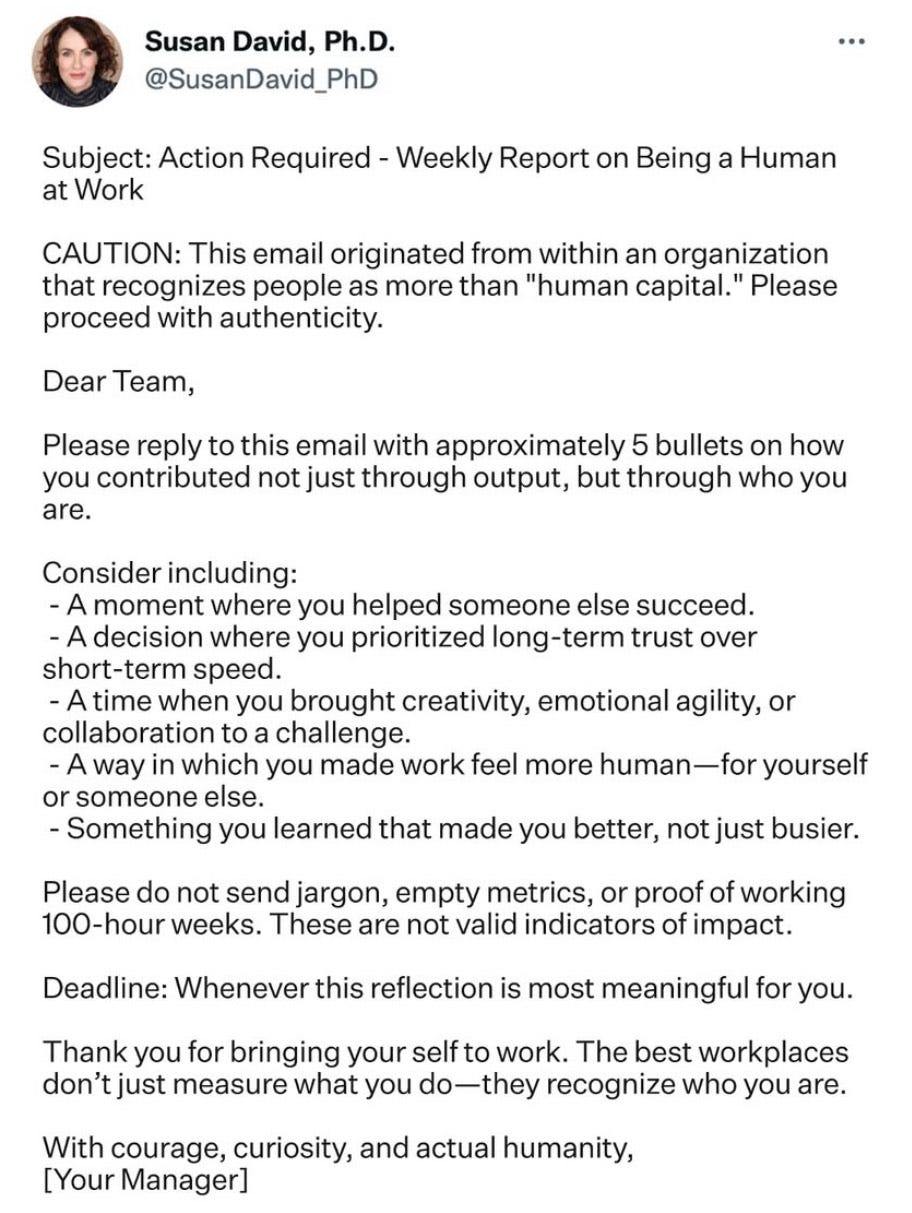
FOLLOW: This tongue-in-cheek post by Harvard Medical School psychologist Susan David got me thinking about how leaders can prioritize thoughtfulness over authority. IYKYK!
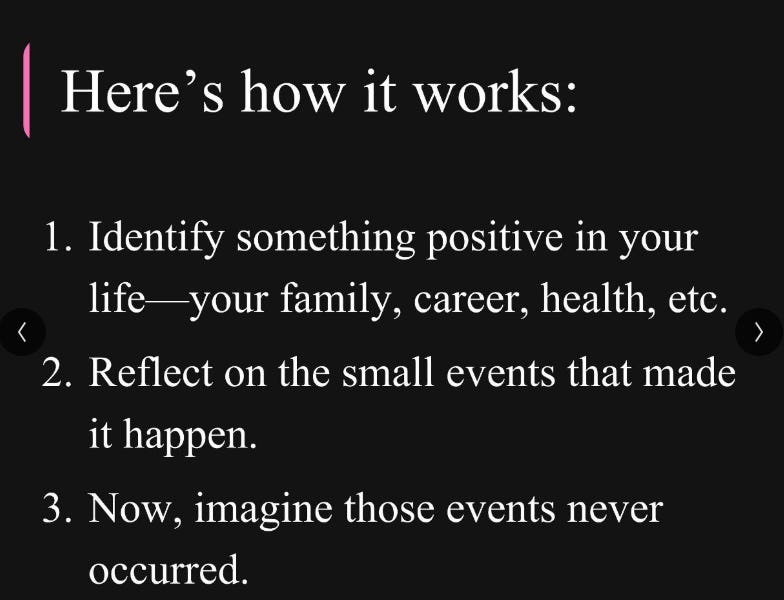
READ: Want to get better at practicing gratitude? Try a method called Mental Subtraction of Positive Events. Daniel Pink explains it here.
WATCH: My wife and I have been hooked to the Netflix show A Man On The Inside, by Michael Schur, the genius behind The Office, Parks And Recreation and A Good Place. The show is about a retired professor who goes undercover to solve a robbery at an old-age home. What ensues is both funny and heartwarming in equal measure.

BE AWED: The Tabebuias are beginning to bloom in Bangalore, and this tree in Indiranagar literally stopped me in my tracks—it was so breathtaking, I gasped: